Living with osteoporosis means adjusting how you move so you can keep doing it safely. Staying physically active is an important part of maintaining bone health, muscle strength, balance, and overall function.
Osteoporosis changes the way you approach certain everyday movements. In particular, it’s important to be mindful of movements that place additional stress on the spine.
As a kinesiologist, one of the concepts I often discuss with clients who have osteoporosis is spine-sparing movement. Spine-sparing strategies are simple ways to modify everyday activities so you can continue doing the things you enjoy while reducing unnecessary stress on your spine.
What Is Spine-Sparing Movement?
Spine-sparing means modifying movements that can place greater stress on the spine.
According to Osteoporosis Canada, this includes being mindful of movements involving:
- Repeated forward bending
- Twisting the spine
- Bending all the way forward or to the side
- Twisting all the way to the side
- Holding a bent or twisted position for an extended period
- Bending or twisting while holding something heavy
- Rapid or repetitive bending or twisting
- Combined twisting and bending, such as some yoga flows
You can keep moving. The aim is to learn how to move differently.
1. Bend From Your Hips and Knees
One of the simplest spine-sparing strategies is changing how you bend.
When reaching toward the floor, bend through your hips and knees and keep your spine in a more neutral position. This is sometimes described as using your hips as a hinge.
For example, if you’re picking something up from the floor, bend your hips and knees while keeping your back long.
Two exercises that have helped my clients learn to hinge:
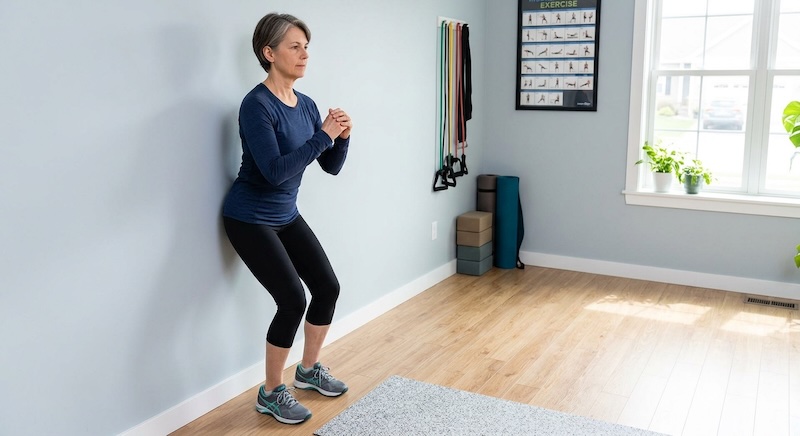
Wall tap: Stand facing away from a wall, with your heels about half your foot’s length from it. Tap your bum to the wall without leaning backwards or shifting all your weight into your heels. Stay balanced over your feet and keep your knees stacked over your toes. Try 8 to 10 slow repetitions.
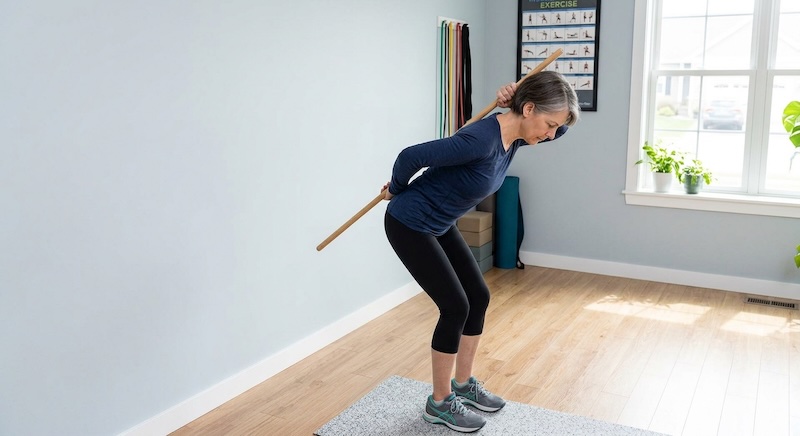
Broomstick hinge: Hold a broomstick handle along your back, with one hand behind your neck and the other at your low back. Make a slow bowing motion while keeping three points of contact on the handle: the back of your head, your upper back, and your tailbone. Try 8 to 10 slow repetitions.
2. Turn With Your Feet Instead of Twisting Your Spine
Another important spine-sparing strategy is learning to turn your whole body as one unit.
If you need to change direction, step your feet around so your hips, shoulders, and feet turn together. This is sometimes called a step-to-turn.
To reach something behind you, take a few steps and turn your entire body toward the object.
3. Be Mindful When Lifting
You can usually keep lifting with osteoporosis. Pay attention to how you lift.
When lifting:
- Keep the load close to your body.
- Use your hips and knees to lower yourself, keeping your spine in a neutral position.
- Avoid combining lifting with twisting or bending.
- If something is heavy, use your lower-body muscles to do the work.
4. Pay Attention to Repetition
Sometimes the concern comes from performing the same movement over and over.
Everyday life involves bending and twisting, and that’s expected. People at higher risk of fracture may need to limit repetitive bending and twisting, particularly when combined with weight or larger ranges of movement.
When possible, modify the activity or change your position so you aren’t repeatedly stressing the spine in the same way.
5. Avoid Combining Risky Movements
A particularly important principle is to avoid combining several challenging movements at once.
For example, bending + twisting + lifting places more stress on the spine than a single movement performed with good control.
Break the movement into smaller steps:
- Bend using your hips and knees.
- Pick up the object.
- Stand upright.
- Step your feet to turn.
- Move in the new direction.
6. Be Mindful When Sitting and Standing Up
Your position also affects the load on your spine.
When sitting, aim for an upright posture and avoid slouching. If you need to turn or reach for something, move your entire body.
To stand up from a chair, scoot toward the edge of the seat, hinge forward from your hips with your back long, and push up through your legs.
7. Move Slowly and With Control
How you perform a movement matters as much as which movement you choose.
Use slow, controlled movements, and take extra care when bending or twisting. Taking a moment to think about your position before you move makes spine-sparing strategies much easier to build into everyday life.
Beyond Spine-Sparing: When to Get Professional Guidance
Spine-sparing movement is one piece of the puzzle. Building strength and balance to prevent falls, improving your posture, and feeling more confident on your feet are also important if you have low bone density.
If yoga, Pilates, or walking has been your main form of activity, progressive resistance training is one of the most effective ways to help maintain or improve bone density. Learning to strength train safely requires some instruction and guidance.
It’s a good idea to work with a kinesiologist or other exercise professional if you:
- Have recently been diagnosed with osteoporosis or low bone density
- Have had a fracture
- Are worried about falling
- Aren’t sure which exercises are safe for you
Everyone’s fracture risk is different. The right level of exercise and the modifications you need depend on your health, fitness level, fracture history, and previous experience with exercise. Check with your doctor or care team before starting a new exercise program, especially after a fracture.
At Symmetrix, we help clients with osteoporosis build strength safely and with confidence. Book an assessment to get started.
The goal is to keep moving, and to move well. With the right strategies and guidance, people living with osteoporosis can continue to exercise and enjoy everyday activities while protecting their spine.
Written By