
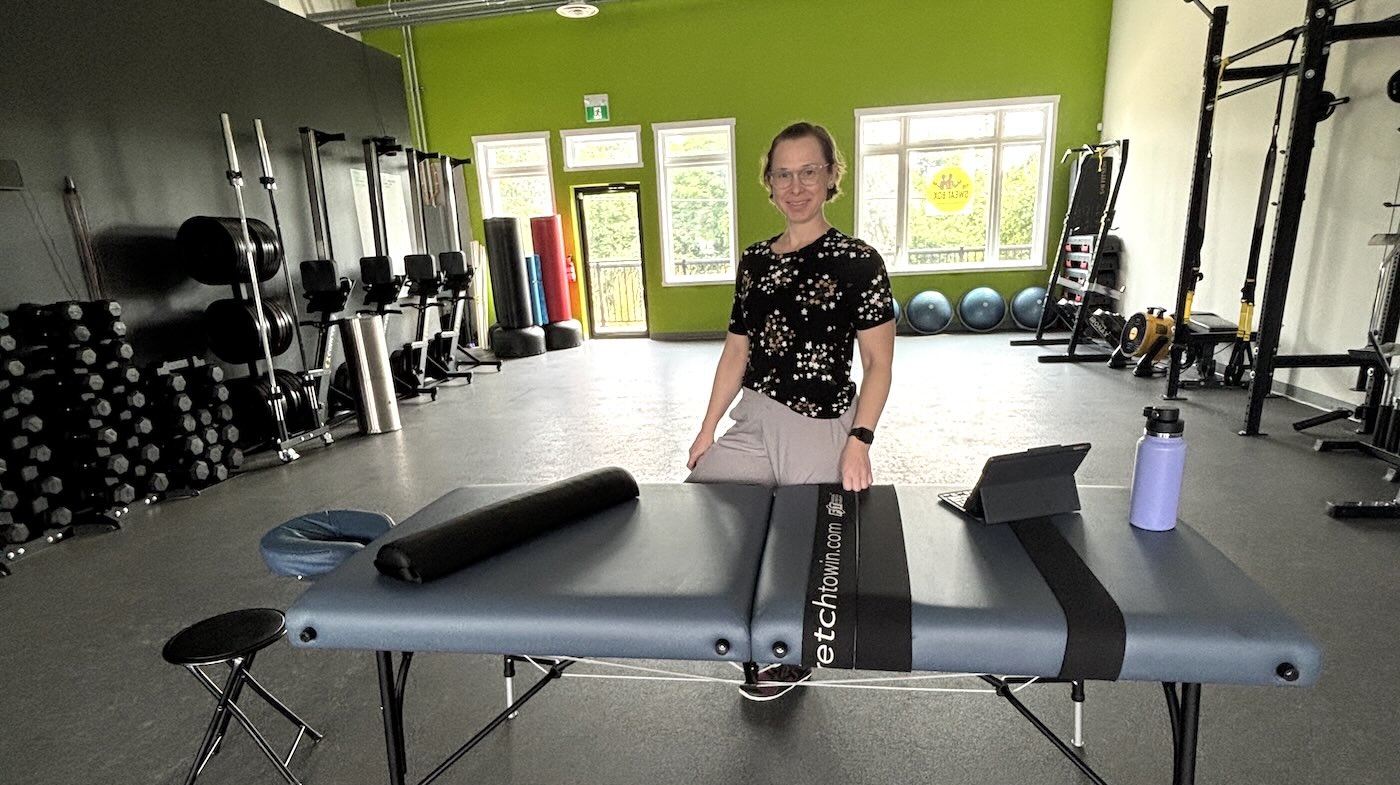
Fascia Stretch Therapy Vancouver
Assisted stretching technique available at Symmetrix
You've tried massage, you've tried yoga, and you're still not moving the way you want to — Fascia Stretch Therapy (FST) might be exactly what your body is craving. FST goes beyond just assisted stretching!
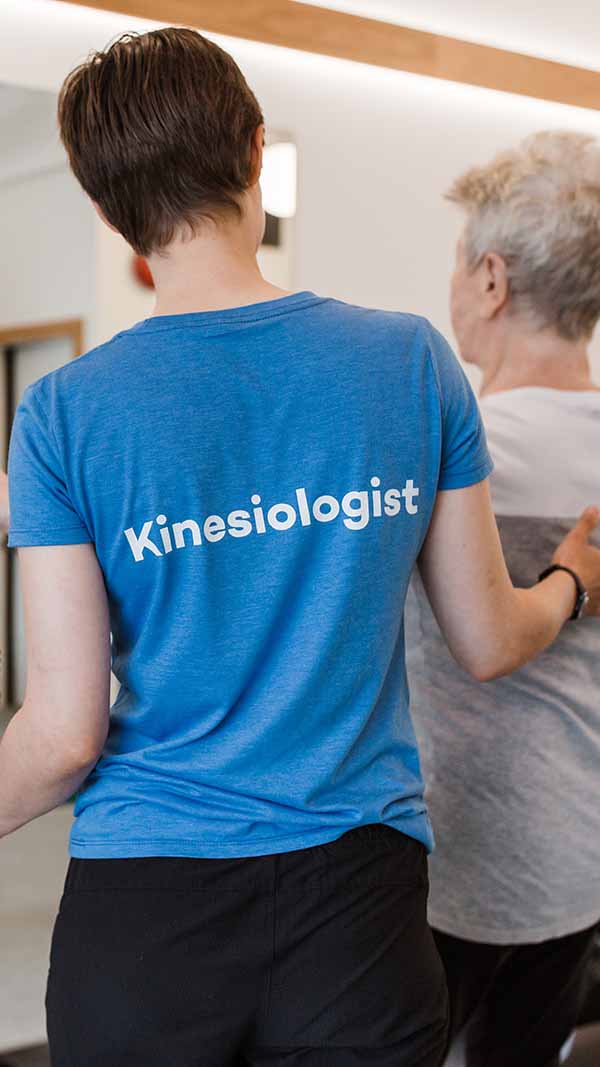
It has a whole body design; incorporating your muscles, fascia, joints and nervous system. At Symmetrix, you will work with a kinesiologist, not simply a stretch therapist or trainer.
What Is Fascia Stretch Therapy?
Think of it this way: you walk in feeling like you're wearing denim jeans fresh out of the dryer: stiff, unyielding, every movement a negotiation. You walk out feeling like you're wearing buttery soft yoga pants. Moving freely and smoothly is there. The restrictions are gone.
Fascia Stretch Therapy (FST) is a manual therapy system that works with your body's fascial network; the connective tissue that surrounds and links your muscles, joints, and organs.
Where massage therapy focuses primarily on muscle tissue, FST targets the fascial lines that run throughout your entire body. It integrates traction, compression, circumduction, and PNF (proprioceptive neuromuscular facilitation) stretching to create movement and space that your body can't access on its own.
In short: we do the yoga for you. You get the gains without the effort.
What to Expect in a Fascia Stretch Therapy Session
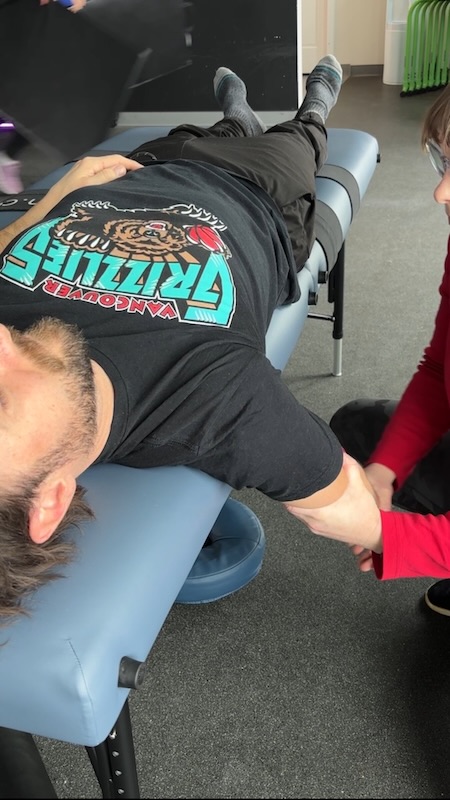
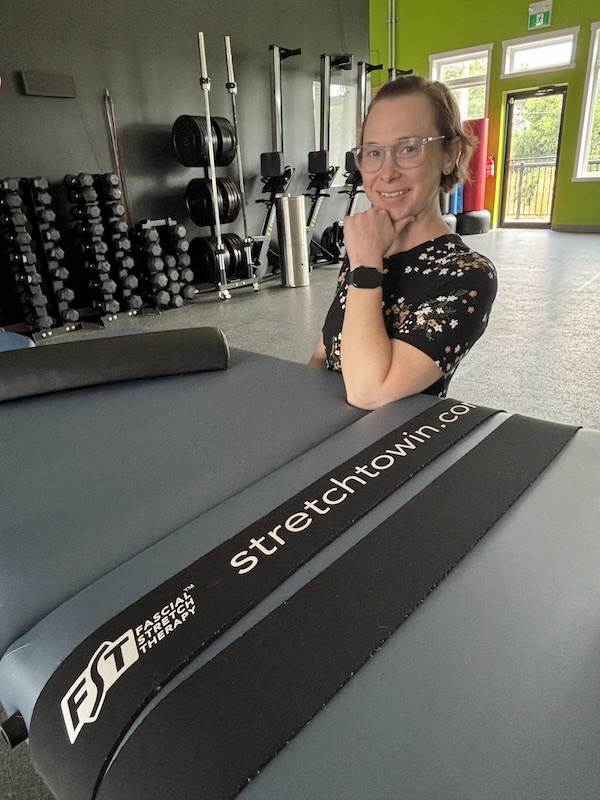
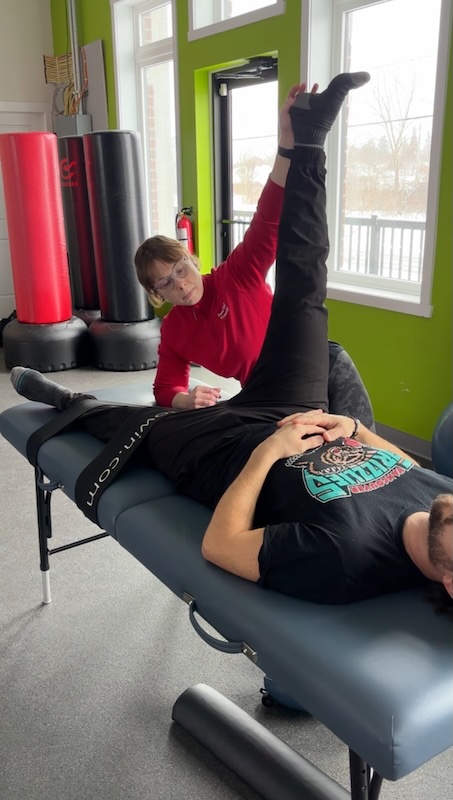
FST takes place on a treatment table. Your kinesiologist will use straps to stabilize the side of the body not being worked on — this lets you release more fully into the stretch, rather than bracing or compensating.
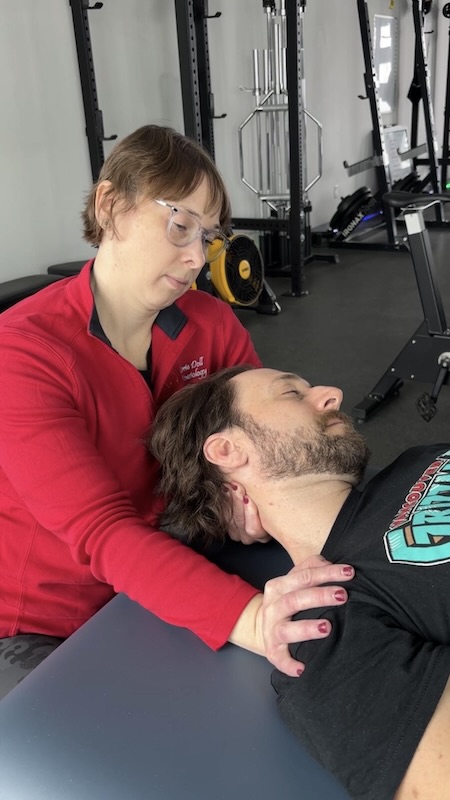
From there, they'll guide your body through positions and ranges of motion you can't reach on your own. The light traction applied during the session creates space in the joint itself, allowing for a deeper, more effective stretch than passive or self-directed stretching can achieve.
Throughout the session, your kinesiologist is continuously evaluating — reading how your body responds, incorporating your feedback, and addressing movement restrictions as they find them. It's a conversation between practitioner and body, not a scripted sequence.
One other thing worth knowing: FST is practiced fully clothed. No oils, no undressing. You arrive, you lie down, and you leave moving better.
FST Session lengths
- Initial assessment — 75 minutes
- Follow-up sessions — 45, 60, or 75 minutes
Benefits of Fascia Stretch Therapy
What makes FST different? FST uses traction to create more space in your joints and soothes your tissues and nervous system through smooth movements and unique positions. Gains without pain!
Clients regularly experience:
- Less pain: particularly chronic, hard-to-locate tension that doesn't respond to targeted muscle work
- Less stress: the parasympathetic response to supported, passive movement is real; most clients leave in a noticeably different state than when they arrived
- Better sleep: reduced physical tension and encouraging your body to move into the rest and digest portion of the nervous system, often carries through to a more restful sleep
- More flexibility and mobility: not just in the area worked, but through connected fascial lines
- Increased balance and symmetry: movement restrictions rarely show up equally on both sides; FST addresses the asymmetries that accumulate over time
Who Is Fascia Stretch Therapy For?
FST is appropriate for almost everyone, and particularly effective for people who have tried other modalities and not gotten the results they were looking for.
Athletes: FST supports recovery, addresses sport-specific tightness, and improves range of motion without the muscle soreness that can follow more aggressive soft tissue work.
Folks with chronic low back pain: the fascial lines that run through the hips, pelvis, and lumbar spine are a primary FST focus. If your back responds briefly to massage but the pain returns, FST can bring a unique multi-planes of movement approach to your pain and restrictions that traditional massage does not.
People with fibromyalgia: the gentle, supported nature of FST makes it accessible for clients with heightened sensitivity; there is no direct deep muscle manipulation.
Those experiencing stress: physical tension and psychological stress are not separate problems. FST's passive, guided format creates conditions for the nervous system to downregulate, not just the muscles.
People who feel generally tight: you don't need a diagnosis or an injury to benefit. Many FST clients simply want to move more freely through their day — hiking, gardening, keeping up with grandchildren — without the background stiffness that accumulates with age and activity.
Massage therapy non-responders: if you've committed to massage and haven't found lasting results, FST uses a different lens to view and address your issues. The two modalities are complementary, but they work at different levels. For some bodies, FST is what the body is craving.
The Symmetrix FST Difference
Kinesiologist-delivered FST: Your FST practitioner at Symmetrix is a degree-holding kinesiologist. That credential means they understand movement, anatomy, and the body's interconnected systems, not just the mechanics of stretching.
Individualized assessment: Every FST relationship begins with a 75-minute assessment. We evaluate how you move, where restriction lives in your body, and what's driving it before we begin addressing it.
Evidence-based approach:FST was developed with the science of fascia in mind: the fascial lines, what fascia responds to, and what the research shows about tissue mobility. It's not guesswork.
Integrated care: FST at Symmetrix doesn't exist in isolation. If your needs extend into exercise rehab, chronic pain management, or personal training, your kinesiologist can bridge those services, or refer you within the team.
Your Fascia Stretch Specialist
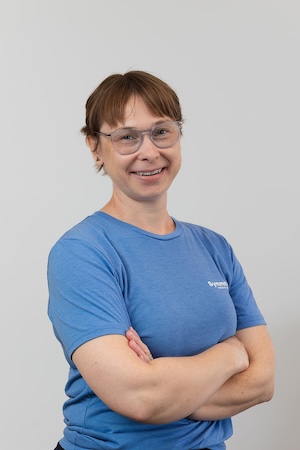
Carrie Doll
Kinesiologist
Carrie's background is in gymnastics coaching, physical conditioning and rehab, and she specializes in corrective treatments for movement
What our clients are saying


Symmetrix Studio Hours
Yaletown Kinesiology Studio
Monday-Friday: 6am to 8pm
Saturday: 9am to 6pm
Sunday: CLOSED
1059 Cambie St
Vancouver, B.C. V6B 5L7
Cambie Village Kinesiology Studio (New)
Monday: 1pm to 6pm
Tue, Wed, Fri: Mornings
Thu, Sat-Sun: CLOSED
103-4088 Cambie St
Vancouver, B.C. V5Z 2X8
Burnaby Heights Kinesiology Studio
Monday-Friday: Mornings to 8pm
Saturday: 9:30am to 4pm
Sunday: CLOSED
204-4580 Hastings St
Burnaby, B.C. V5C 2K4